Best Food Halls in Denver, Tried and Tested
Denver's warehouse-to-Union-Station food hall boom has made picking one for dinner its own small negotiation. Here is how to actually choose.
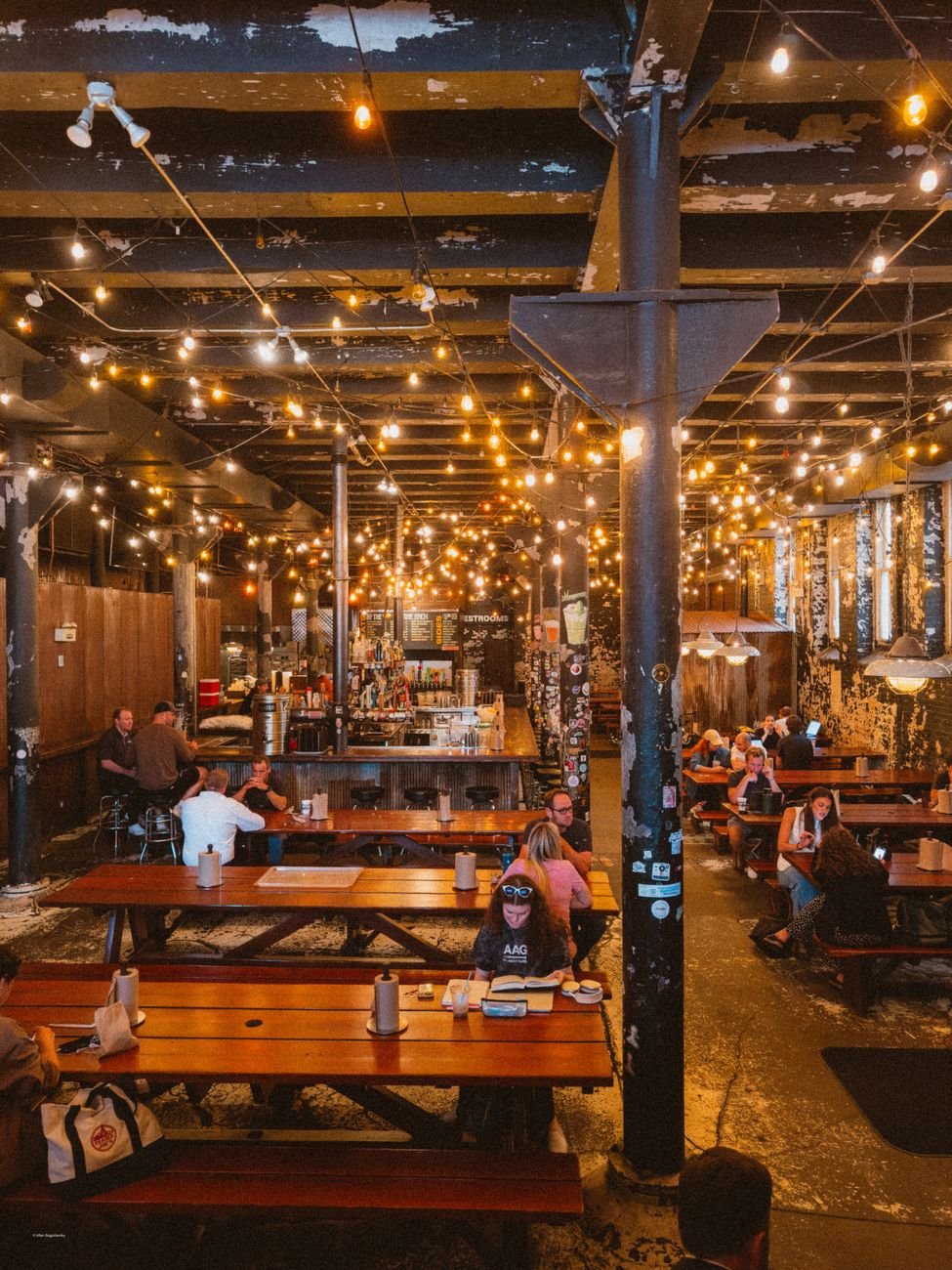
Six o'clock on a Thursday, and the line at the counter nearest the door hasn't moved in ten minutes because the guy ahead of me is still deciding between two noodle stalls that smell nearly identical. Behind me, a table of four has already split off in three directions, each person chasing a different craving, with a plan to reconvene at a long communal table under a bank of Edison bulbs. Nobody at that table works there. Nobody at that table agrees on what they want to eat. That's the whole appeal, and it's why the question of the best food halls in Denver comes up more than almost any other dinner debate in this city.
Denver didn't invent the format, but it took to it fast, and for reasons that track with how the city eats generally. This is a town full of people who moved here from somewhere else, who work odd schedules chasing early tee times or late trailheads, who have strong and specific opinions about where to get a bowl of green chile and no patience for a group text that can't settle on a single restaurant. A food hall solves the group-text problem. Everyone gets what they want, everyone pays their own tab, and the whole thing wraps up faster than a sit-down dinner with a kitchen running one ticket at a time.
What actually makes the best food halls in Denver worth the trip
Not every collection of counters under one roof deserves the trip, and after enough Thursday nights doing exactly this kind of scouting, a few things separate the ones worth returning to from the ones that were worth seeing once.
- Vendor turnover that means something. The good halls rotate in newer, smaller operators who couldn't afford their own storefront yet. That's the actual value proposition of the format, a shot for a chef with one great dish to prove it works before signing a fifteen-year lease.
- A bar program that isn't an afterthought. Given how seriously this city takes craft beer, a food hall with a thrown-together taps list is telling on itself. The best ones treat the bar as its own destination, not a place to grab a can while you wait for a table.
- Seating that survives a crowd. Long communal tables, movable stools, patio overflow when the weather cooperates. A hall that's beautiful at 4pm and unusable at 7pm hasn't solved the actual problem.
- Walkability to something else. The strongest halls sit inside neighborhoods you'd want to be in anyway, so the food hall is one stop on a night out rather than the entire destination.
Where the format lives now
Union Station remains the reference point, if only because it proved the model could work here at all. The building itself does half the job, restored, high-ceilinged, built for people moving through it, which is what a food hall actually is: a train station for appetites. It's touristy in the way any landmark gets touristy, but it earns the traffic, and it's still the easiest answer for a group with wildly different cravings and zero time to argue about it.
RiNo took the concept and ran it through a different filter. The warehouses there were built for freight, not diners, so the halls that moved in kept the bones exposed and let the garage doors do the work of separating a patio from a bar in the summer. It's the version of a Denver food hall that feels most like the neighborhood around it, loud and a little unfinished on purpose, with breweries and galleries close enough to fold into the same night.
LoHi and the brunch corridor
Highland's food halls lean into what that stretch already does best, which is brunch that runs long. Expect a crowd already in hiking layers debating a dawn patrol up a fourteener, coffee stalls doing steadier business than the bars, and a patio view back toward downtown that makes the wait worth it. This is the food hall for a slow Saturday rather than a quick Tuesday dinner.
Capitol Hill and Baker, for something looser
The halls closer to Capitol Hill and the South Broadway strip skew smaller and stranger, in a good way, closer in spirit to the bohemian arts scene and indie storefronts around them than to Union Station's polish. Vendors here take more chances because the audience expects them to.
How to actually choose one on a given night
Match the hall to the night, not the other way around. A first date wants Union Station or somewhere with real architecture doing ambient work so the conversation doesn't carry the whole load. A group with a picky eater and a vegan and someone who only wants a burger wants RiNo or LoHi, where the vendor spread is widest. A solo weeknight dinner, honestly, might not want a food hall at all, since the format rewards company, and eating alone at a hall can feel like eating in an airport terminal that happens to have good bison burgers.
Go hungry enough to split three plates, not just order one and call it dinner. That's the mistake first-timers make most often, treating a food hall like a food court where you pick one stall and stick with it. The format only pays off when you actually use it, when the table ends up with a plate of Rocky Mountain oysters next to a bowl of noodles next to something with Palisade peaches in it, and everyone reaches across for a bite. Come with people willing to share, and any of these halls will do the job the concept was built for in the first place.