Things to Do in Rino, Block by Block
River North stopped being a secret around 2015 and never looked back. Here's the honest, corridor-by-corridor version, including the parts that make longtime Denver people wince.
On a Tuesday morning in early June, a forklift beeped backward past a mural crew on Larimer Street while a woman in running clothes waited at the corner, earbuds in, scrolling her phone instead of looking at the wall behind her that a dozen visitors would photograph that same afternoon. A crane moved slowly over a half-finished condo tower two blocks north. Somewhere behind a warehouse door, a compressor kicked on. Anyone hunting for things to do in RiNo should start with that rhythm rather than a list: construction trucks and gallery installs, plus a coffee line spilling onto the sidewalk, all inside the same two blocks.
Ask five Denver people where to start and you'll get five different answers, because RiNo was never one strip. It's a run of parallel streets, Larimer and Walnut and Blake and Brighton Boulevard, each with its own personality, bookended by the South Platte River on one side and Five Points pressing in on the other. The district grew out of old warehouses and rail spurs between roughly Broadway and the river, stretching north along the tracks toward 40th, and it has spent the last decade turning from working industrial land into the most built-up and most argued-over neighborhood in the city. Nobody here agrees on whether that's a win. This guide walks it the way you'd actually walk it, corridor by corridor, with the complicated parts left in.
Things to Do in RiNo, Corridor by Corridor
The district reads differently depending on which street you're standing on, so the fastest way to get your bearings is to treat it like four separate neighborhoods stitched together by cross streets and rail crossings. Start on Larimer if it's your first time. Move to Walnut and Blake once you want fewer strollers and more actual production space. Brighton Boulevard is where the neighborhood still looks like what it used to be, for now.
Larimer Street: the postcard version
Larimer is the RiNo people picture when they picture RiNo, the stretch where the murals are thickest, the sidewalk patios are busiest, and the street itself feels art-directed even when it isn't. Warehouse facades here have been painted, repainted, and photographed for engagement shoots more times than anyone could count, and the district leans into that reputation without much embarrassment. Walk it slow on a weekend afternoon and you'll pass gallery windows and a coffee roaster's storefront, and at least one wall being reworked by an artist on a lift, because murals in this district are not permanent installations. They get painted over and replaced on a rolling basis, which means the wall that made someone's feed two summers ago is probably a different piece today.
Larimer is also where the district's food hall culture is most concentrated, a converted warehouse space with a rotating lineup of stalls under one roof, the kind of setup where a group with four different appetites can sit at one table. It's not a Denver invention, food halls have shown up citywide, but the RiNo version benefits from the same warehouse bones that make the murals pop: high ceilings and exposed brick, with garage doors that roll up the second the weather allows it. Come on a weeknight if you want to actually get a seat.
Walnut Street: where the beer gets serious
One block over, Walnut trades some of the polish for production. This is brewery row in the loosest sense, not one address but a run of taprooms tucked into former warehouse units, most with their own small-batch identity and a patio that fills up the second the weather cooperates. Denver has never treated craft beer as a novelty, and Walnut Street is where that seriousness shows up most plainly. Tasting flights get discussed like wine, and regulars will argue about a brewery's seasonal release with the same intensity someone in another city might reserve for football. If you're building an afternoon around beer, this is the corridor to commit to, and it connects easily to the brewery crawl regulars already have mapped out in their heads.
Walnut also holds onto more of the neighborhood's working-warehouse texture than Larimer does. Loading docks are still loading docks here, some of them, even as the building next door gets gutted for lofts. A delivery truck backed up to a dock next to a hand-lettered taproom sign is as RiNo as any mural.
Blake Street: galleries and the old rail spine
Blake Street runs closer to the rail corridor that gave River North its industrial start, and it still feels the most like the neighborhood's original character: long warehouse blocks, gallery spaces tucked into ground-floor units, and less foot traffic than Larimer on an average day. A lot of the district's working artists have actual studio space here, as opposed to just wall space, and gallery openings here draw a crowd that skews local over touristy. Building scale matters here too. Blake Street warehouses run deep and low, built for freight rather than foot traffic, and that industrial geometry is part of what made the neighborhood attractive to artists and brewers in the first place, before it made it attractive to developers.
Brighton Boulevard: the industrial edge that's disappearing
Brighton Boulevard is the neighborhood's spine and its most honest street, a wide industrial corridor that still carries real freight traffic alongside the newer breweries and event spaces that have moved in around it. It's less walkable than Larimer or Walnut, wider street, faster cars, longer blocks, and that's exactly why it still feels unfinished in a way the rest of the district doesn't anymore. Warehouses here still hold distilleries, event rentals, and a few operations that actually manufacture things, sitting shoulder to shoulder with newly poured sidewalks and landscaping that clearly arrived in the last five years. Locals who've watched the corridor change describe Brighton Boulevard as the place where you can still see what RiNo was before RiNo was a brand, though that window is closing block by block as new construction fills in the gaps.
The River Side: South Platte and Confluence Park
RiNo's western edge runs down to the South Platte River, and the trail along it is the neighborhood's actual outdoor escape valve, the spot where you go when the brewery patios feel too loud and you want ten minutes of moving water instead. The South Platte River Trail threads along the water, cyclists and runners and stroller traffic all sharing one paved path that connects north and south through the city, and on a warm evening it carries almost as much foot traffic as Larimer, just quieter about it.
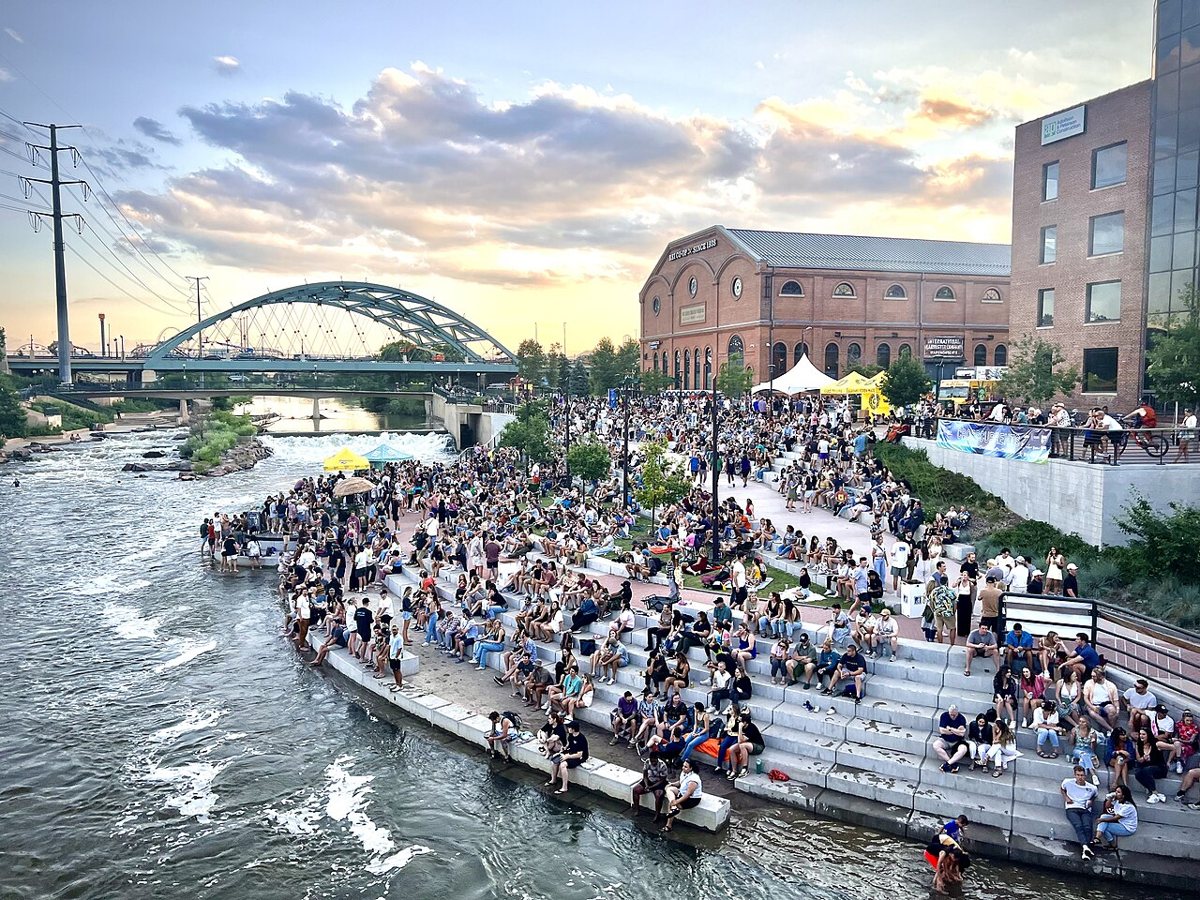
Follow the trail south and it spits you out at Confluence Park, technically just downstream of RiNo proper but close enough that most people treat it as part of the same outing. Denver was founded on this spot, where Cherry Creek meets the South Platte, and it draws kayakers and tubers working the small man-made rapids alongside families just wading in the shallows. It's the natural end point if you're stitching RiNo onto a longer day in the city. It's not a secret and never has been. What it remains is one of the few places in this stretch of the city where you can stand in moving water fifteen minutes after leaving a warehouse district.

38th and Blake: the Station That Changed the Neighborhood
The 38th and Blake RTD station, on the A Line that runs between Union Station and Denver International Airport, sits right in the middle of the district and functions as the unofficial front door for a lot of first-time visitors. Ride it from Union Station and you're on the platform in a matter of minutes, no parking search required, which matters in a neighborhood where parking has become a genuine headache. The station itself isn't a destination the way a mural wall is, but its arrival reshaped development patterns around it, pulling new construction toward the tracks in a way that's visible if you know to look for it. Newer buildings cluster near the platform, older warehouse stock sits further out.
Where RiNo Runs Into Five Points
Walk far enough west and RiNo's edge dissolves into Welton Street and Five Points, Denver's historically Black cultural center and, for most of the twentieth century, one of the country's significant jazz corridors outside of a handful of major cities. That border is not a footnote to a RiNo guide. It's the part of the story that makes the rest of it complicated, and any writeup that skips it isn't being honest about the neighborhood.
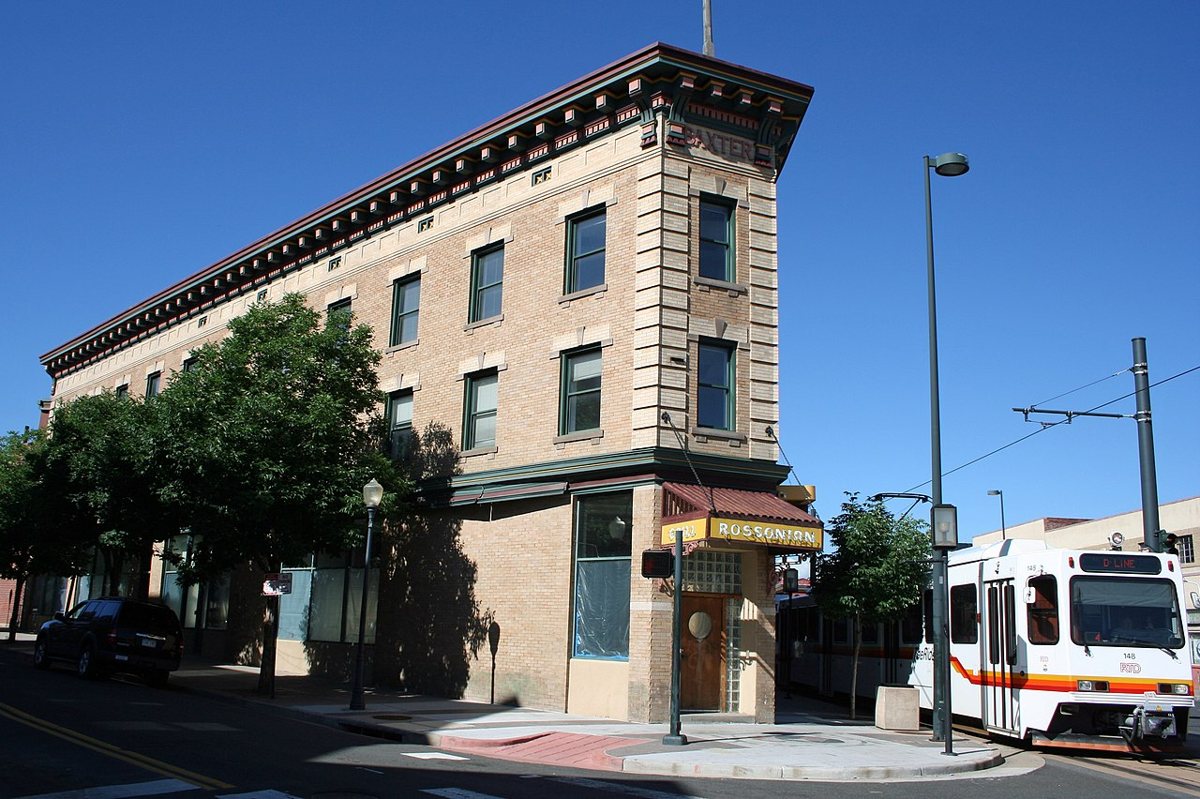
The history there is specific, not decorative. Welton Street was the center of Black Denver for most of the twentieth century, and the Rossonian Hotel on the corner was the jazz room that mattered in this part of the country, one of the few places between Kansas City and the West Coast where touring Black musicians could both play and sleep during segregation. The neighborhood picked up the nickname "the Harlem of the West" out of that era. The Rossonian building still stands and has spent years cycling through redevelopment plans, which tells you most of what you need to know about how this stretch has been treated. Walk Welton with that in mind and the street stops reading as RiNo's quieter cousin and starts reading as the older, more consequential neighborhood that RiNo grew up against.

Five Points has been losing longtime Black residents and businesses for years as property values along its edges climbed, pushed in part by the same development pressure that turned RiNo's warehouses into condos and breweries. None of that is settled history. It's an ongoing conversation among Denver residents, including plenty who live nowhere near either neighborhood, and it shows up in city planning meetings and op-eds on a regular basis. Walking from RiNo's brewery patios into Welton's older storefronts, the shift is visible in the buildings themselves: fewer garage-door taprooms, more legacy signage, a different architectural vocabulary entirely. Go with some awareness of what that contrast represents rather than just what it looks like in a photo.
Murals, Beer, and the Rest of What You're Actually There For
The mural culture, and why it keeps changing
The murals that define RiNo's visual identity aren't a fixed collection. They rotate, get painted over, and get replaced, largely because of the annual mural festival that has brought artists from around the world into the neighborhood since the early 2010s and reshaped whole blocks of wall space each year. The festival's name, organizers, and footprint have shifted over the years, and it's been the subject of real friction in the neighborhood about who gets to paint and who profits, so check what's actually scheduled before planning a trip around it. Either way, it's the reason the same wall might look completely different from one summer to the next. If you're chasing a specific mural you saw online, don't count on it still being there. That's the honest and, frankly, more interesting fact about how this neighborhood's art works: it's meant to be temporary.
The brewery crawl, properly done
Beer in RiNo isn't a novelty act and locals get a little tired of visitors treating it like one. Walnut Street carries the highest concentration of taprooms, but breweries and distilleries are scattered across Blake and Brighton too, tucked into former warehouse units with production equipment visible through open garage doors. A proper crawl here means picking three stops at most, not ten, and actually talking to whoever's behind the bar about what's in the fermenters that week. It's a very different night than a downtown bar crawl, and worth treating that way.
Food halls and nightlife
Beyond the Larimer Street food hall, the district's nightlife has grown up around later hours on Blake and Walnut, with cocktail bars and later-closing taprooms picking up where the daytime gallery crowd leaves off. It skews younger and louder as the night goes on, especially on weekends, which is worth knowing if you came for the murals and stayed for dinner and suddenly find yourself in a much different scene by ten o'clock. None of it competes with the food scene along South Broadway or in the Highlands for range, and it doesn't need to. RiNo's version is louder, denser, and built around standing rather than sitting.
Coors Field is closer than you think
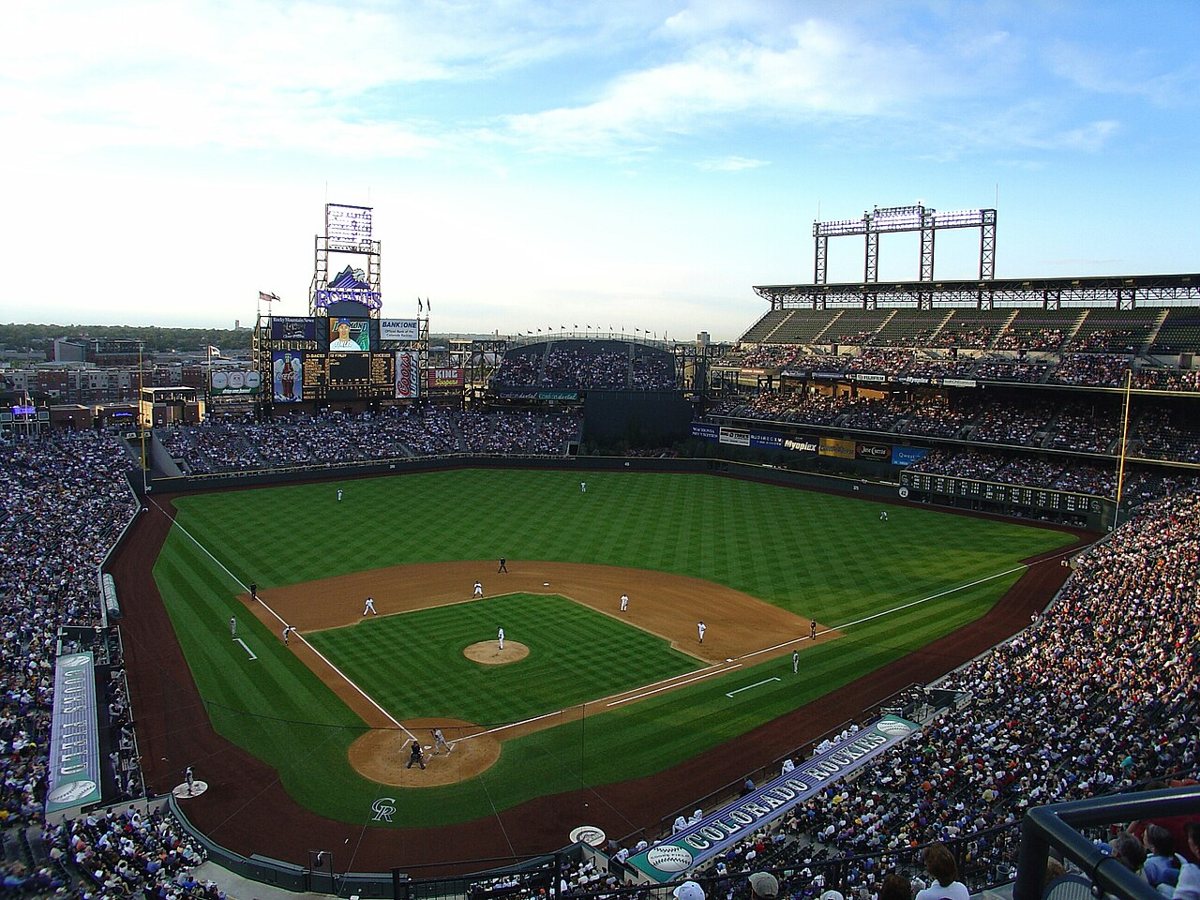
The ballpark sits just southwest of the district, close enough that a Rockies homestand changes the whole character of a RiNo evening whether you bought a ticket or not. Foot traffic swells, parking gets meaningfully worse, and the patios along Larimer and Walnut fill with people in purple on their way in or out. Regulars treat a homestand as a scheduling input rather than an attraction. Check whether there's a home game before you drive over, then decide whether you want that energy or want to avoid it entirely.

Union Station, and the Walk In
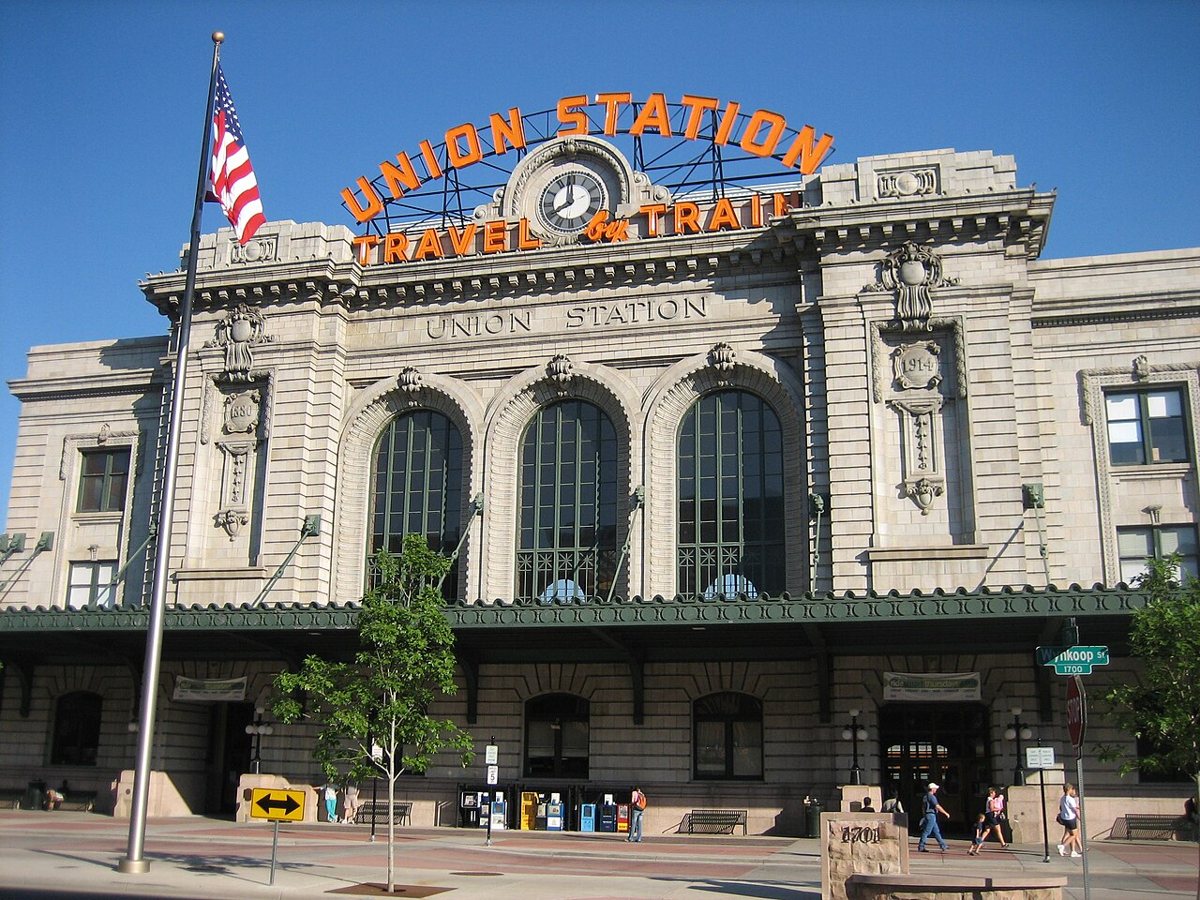
Denver Union Station sits at the downtown end of the corridor, and it's the single best way to start a day in RiNo if you're coming from anywhere else in the city. The 1914 building was gutted and reopened about a decade ago as a transit hub with a hotel, bar, and restaurant space built into the old passenger hall, and the great hall itself is free to walk into and sit in, which people forget. People treat it as a public lobby, because it is one. Nobody checks whether you have a ticket.

From there it's a walk of roughly twenty-five minutes up through Ballpark and into the south end of RiNo, or a couple of stops on the A Line to 38th and Blake if you'd rather skip it. The walk is the better choice the first time. You pass the transition from downtown's glass and brick into the low warehouse blocks that made this district, and the change happens gradually enough that you can actually watch the city's eras stack up against each other. Do it once on foot, then take the train every time after that.
When to Go
Summer is the obvious answer and the worst one. Patios are full, the murals are getting repainted, and everyone from the suburbs has the same idea on a Saturday. The better windows are the shoulders. Late spring and early fall give you the same walkable weather with a fraction of the crowd, and Denver's high-desert climate means a sunny March afternoon can hit sixty degrees and clear the sidewalks of everyone who checked the forecast a week early. Winter thins the district out considerably, but the taprooms and galleries stay open, and a cold weekday afternoon is honestly the best time to look at the art without negotiating around a bachelorette party.
Practical Things to Do in RiNo: Getting There, Parking, and Timing
Parking is the neighborhood's least romantic reality. Street spots have gotten harder to find every year as more residential and hotel construction eats into open lots, and paid lots fill fast on weekend afternoons and during any Rockies homestand. The 38th and Blake A Line station solves most of that headache if you're coming from Union Station or the airport, and it's the easier call for anyone not hauling gear.
- Take the A Line to 38th and Blake rather than fighting for street parking, especially on weekends.
- Walk the corridor rather than drive between streets. Larimer to Brighton is a longer stretch than it looks on a map, but it's flat and fully walkable.
- Weekday mornings and early afternoons are the quietest window for actually seeing the murals without a crowd in every photo.
- Weekend evenings are when the brewery patios and food hall hit capacity, so plan for a wait.
- Check whether a mural festival or a Rockies homestand lands during your visit, since both change foot traffic and street parking across the district.
The Honest Take
RiNo works because the bones underneath it were real: actual freight warehouses and rail lines, actual working-class industry that left behind buildings too solid and too interesting to tear down outright. What's happened since is a genuine success story for anyone measuring foot traffic, tax revenue, or the tags on a photo, and a genuine loss for anyone who watched the rents climb and the neighborhood's edge into Five Points get squeezed in the process. Both things are true at once, and a guide that only tells you where to get a beer isn't telling you the whole neighborhood.
Go for the murals and the river trail, the brewery patios, and the long walk from the train station down through the warehouses. Just don't mistake polish for the whole story, and don't call any of it a discovery. RiNo hasn't been quiet in a decade, and everyone in this city already knows it.