Things to Do in Lodo: The Local Guide
A native's walking guide to Denver's oldest warehouse district, from the Great Hall at Union Station to the last pour at the brewpub that started it all.
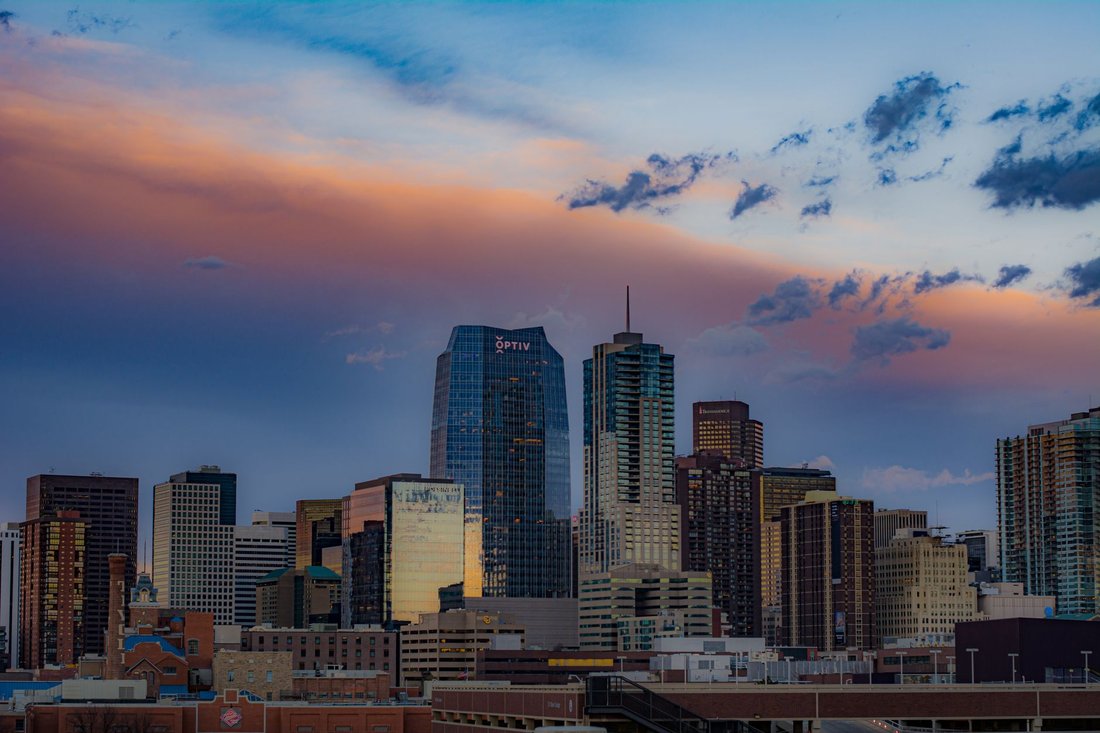
Six o'clock on a September weeknight, and the honest list of things to do in LoDo starts right here, no planning required: the light comes in low and gold through the arched windows of Union Station's Great Hall, and nobody in the room is in a hurry. A family drags rolling suitcases toward the A Line platform. Two guys in Rockies caps split a pitcher at the bar. A woman reads a paperback at one of the long communal tables like it's her living room, because for the next hour it kind of is. Outside, the string lights over Larimer Square are just starting to flicker on, and three blocks south the stadium lights at Coors Field are already blazing for a getaway game. That's a normal Tuesday, not a brochure. Lower Downtown is Denver's original warehouse district, a couple dozen blocks of reclaimed brick and cast iron between the South Platte River and the 16th Street Mall, and it works harder than any other neighborhood in the city to give you a full day without a car.
Things to Do in LoDo: Start With the Anchors
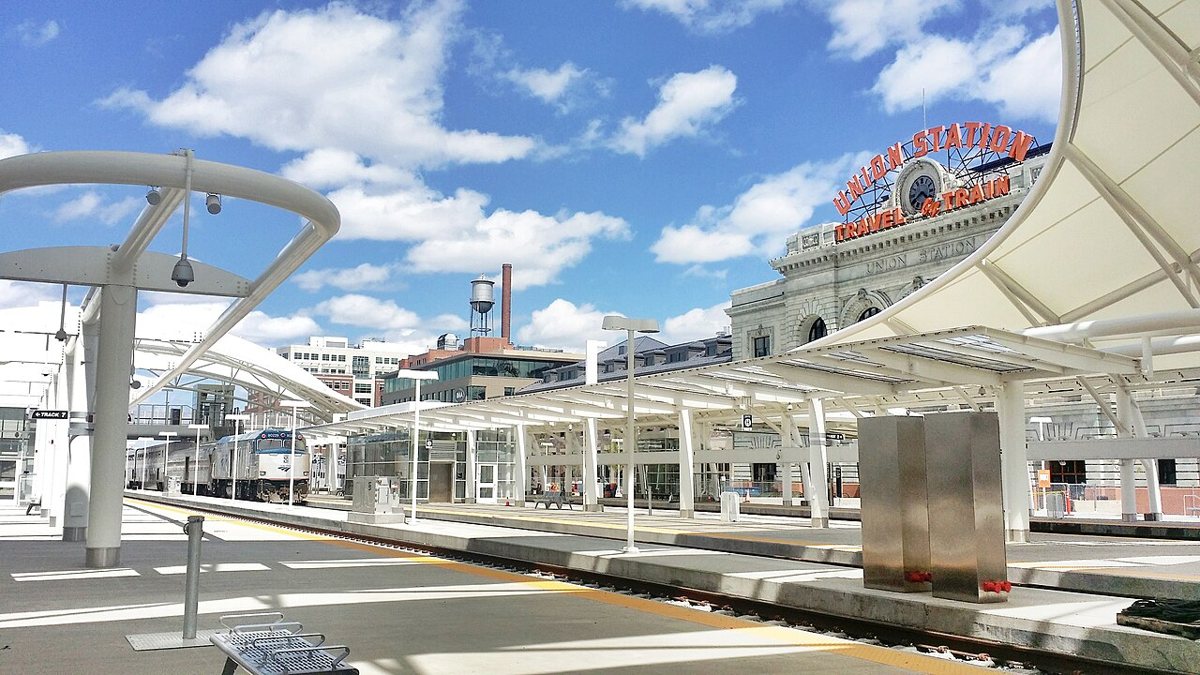
Any list of things to do in LoDo has to start at Union Station, because everything else in the neighborhood radiates out from it. Built in 1914 and restored a decade ago into a working transit hub and dining hall with a hotel above, the building's Great Hall is the closest thing Denver has to a communal living room. You can grab a drink at the bar, work off a laptop at one of the shared tables, or just sit under the vaulted ceiling and watch trains come and go. The Amtrak platform sits out back, and the A Line commuter rail to the airport leaves from the same building, so it's genuinely useful and not just pretty. For a quieter drink, skip the crowd up front and climb to the Cooper Lounge on the mezzanine, which looks down over the whole hall. The building anchors the western edge of LoDo, where Wynkoop and 17th Street meet.

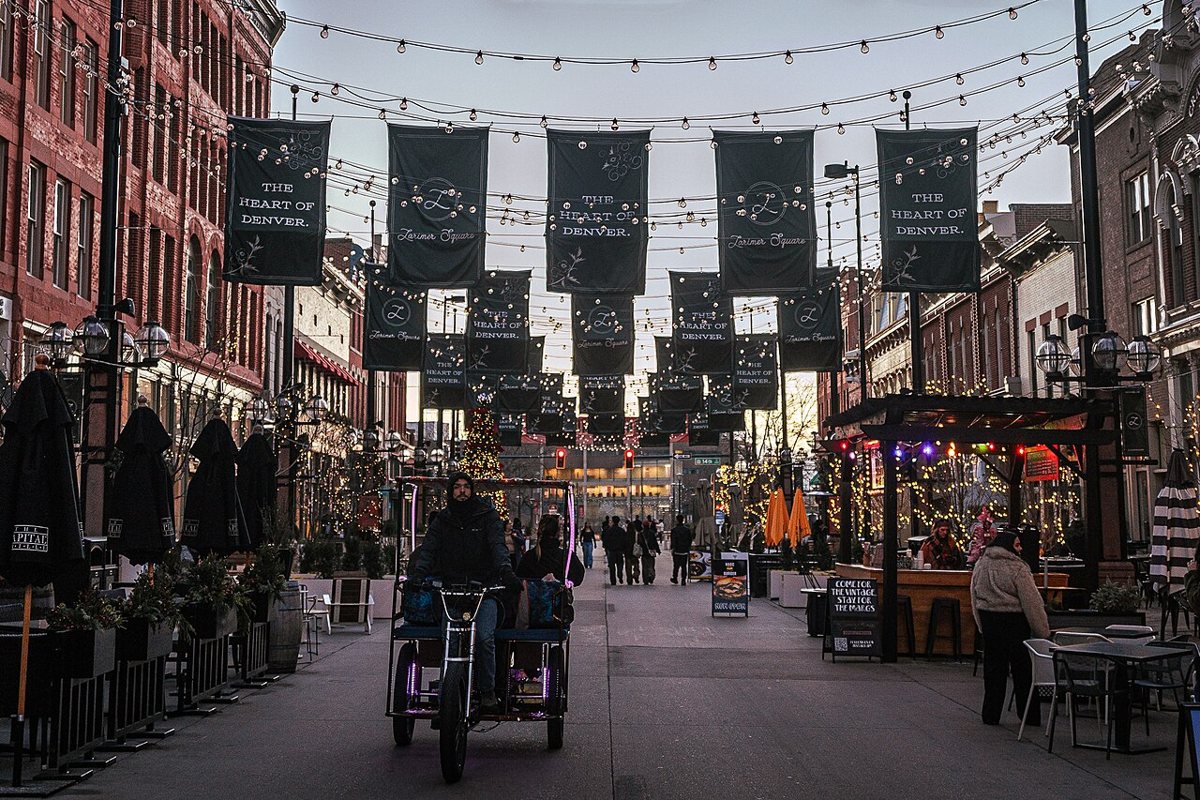
Larimer Square is the oldest commercial block in Denver, dating to the 1870s, and it's held onto its Victorian brick facades and cast-iron storefronts while the rest of downtown got rebuilt around it more than once. The string lights that stretch across the street stay up year-round, and the block does double duty as a boutique shopping strip by day and a dinner destination by night. Walk it slow and look up at the cornices and painted signage, most of it original. The block gets seriously festive over the holidays, when the lights grow denser and the crowds thicken, so a weekday afternoon buys you the quiet version. You will find it on Larimer Street between 14th and 15th, along LoDo's southern edge near the Denver Pavilions.

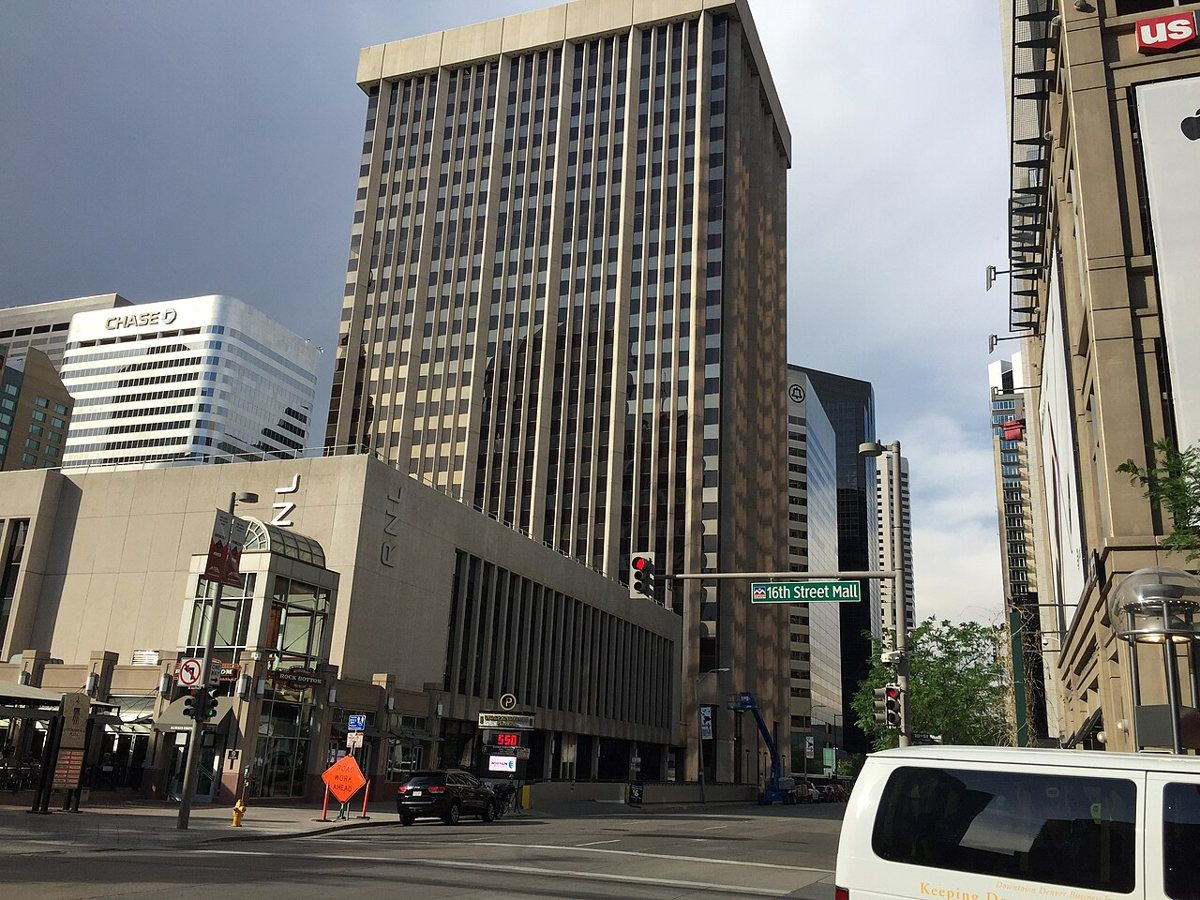
The 16th Street Mall is the pedestrian spine that ties LoDo to the rest of downtown, running from Union Station all the way south to Civic Center. It's not scenic in the postcard sense, but it's the connective tissue that makes walking the whole district possible, lined with the granite pavers that have marked the route for decades and served by a free shuttle the length of the corridor. Locals use it as a through-route more than a destination, hopping on and off to reach restaurants, the convention center, or the Denver Pavilions shops. Check current conditions before you go, since parts of the mall get reworked periodically and the shuttle schedule shifts with construction. The corridor runs the length of downtown, forming LoDo's eastern boundary.

History and Architecture in the Warehouse District
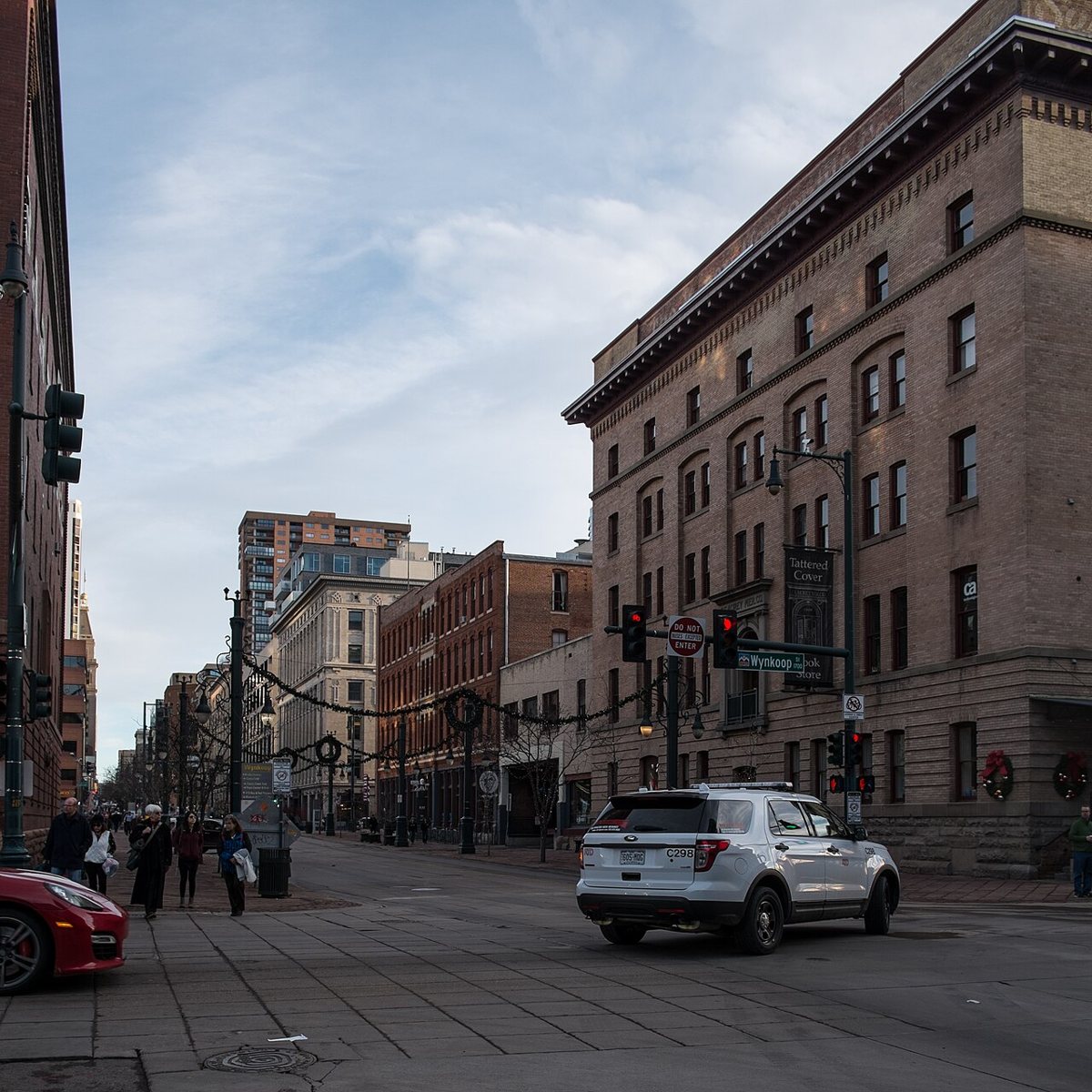
What makes LoDo LoDo, more than any single building, is the brick. This was Denver's wholesale and railroad district in the late 1800s, its warehouses and grain elevators built close to the tracks that fed the growing city. By the 1960s most of it sat empty, and there was a real push to bulldoze the whole area for parking lots and high-rises. A group of preservationists fought that plan and won, and in 1988 LoDo became Denver's first historic district, which is why you can still walk these blocks today and see brick facades from the 1880s instead of glass towers. Look up as you walk Wazee and Blake Streets and you'll spot painted ghost signs for businesses that closed generations ago, still legible on the brick. The viaducts and rail spurs that once served the warehouses are mostly gone or repurposed, but the scale of the buildings, low, solid, close to the street, still tells you exactly what this neighborhood used to do for a living. None of that history has anything to do with ski season seventy miles west. LoDo's story is a railroad and cattle-town story, built on flat ground during Colorado's mining and shipping boom, decades before anyone strapped on a pair of skis for fun. Locals get tired of hearing Denver described as a layover on the way to the resorts, and LoDo is exactly the neighborhood that proves the point wrong, a downtown that built its own identity out of brick and beer and baseball rather than borrowed mountain scenery.
Ballpark and Arena: LoDo on Game Day
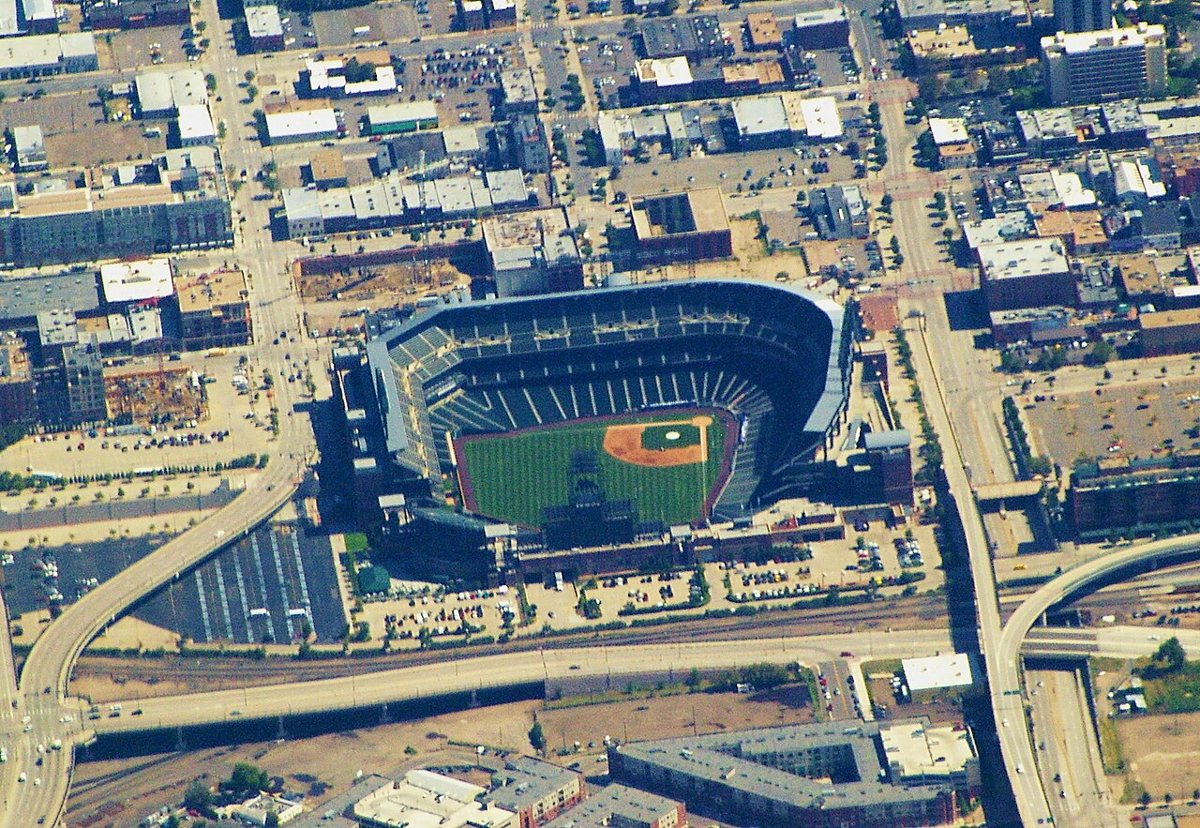
Coors Field sits at the eastern edge of LoDo, technically in the Ballpark neighborhood but close enough that the two blur together on any Rockies game day. The stadium itself is worth a look even if you don't care about baseball, built from the same brick and steel as the warehouses around it so it reads as part of the neighborhood instead of a spaceship dropped into it. Find the row of purple seats in the upper deck, marked at exactly one mile above sea level, a detail that gets pointed out to every visitor exactly once and then becomes background noise to everyone who lives here. Day games in July get brutally hot, with no shade in the outfield sections, so check the forecast before buying upper-deck tickets on the sunny side. The ballpark sits at 20th and Blake, on LoDo's northeastern corner.

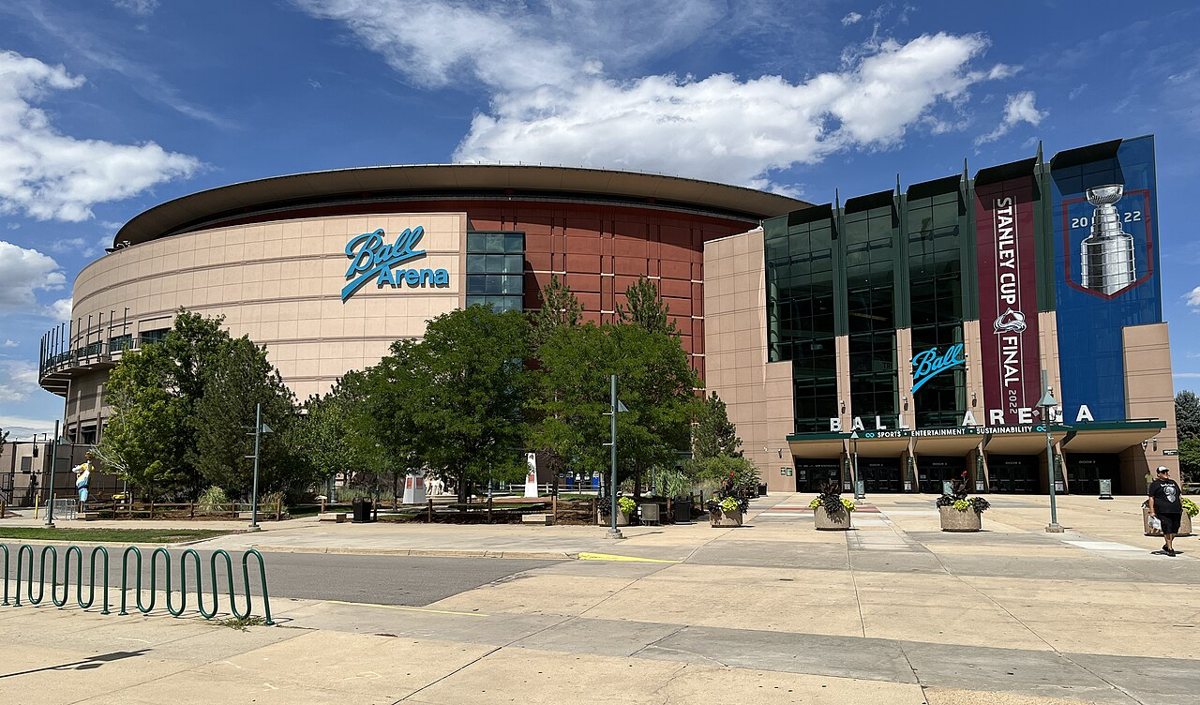
Ball Arena sits on the opposite side of the neighborhood, a short walk across the river from LoDo's western blocks, and hosts the Nuggets and the Avalanche through the winter and spring. It doesn't have the historic pedigree of the ballpark, but it completes LoDo's identity as a genuine sports neighborhood rather than one built around a single team. On game nights the bars along Chopper Circle and the walkways toward the arena fill up fast, and the energy spills back into LoDo proper afterward as people walk back toward Union Station or catch the train home. Parking near the arena gets expensive and scarce on game nights, so taking the train to Union Station and walking the last stretch is almost always faster. It sits west of LoDo, across the South Platte, an easy fifteen-minute walk from the station.

The walk between the two venues, and really between any two points in LoDo, is part of the appeal. On a game night the sidewalks along Blake and Wazee fill with jerseys headed one direction and commuters headed the other, and the two crowds mix without much friction because the neighborhood has been doing this for decades. Bars along the route put game broadcasts on even when the team is on the road, so you can track the score from a patio blocks away from either venue. It's a small thing, but it's the difference between a sports neighborhood and a neighborhood that happens to have a stadium in it.
Eating and Drinking in LoDo
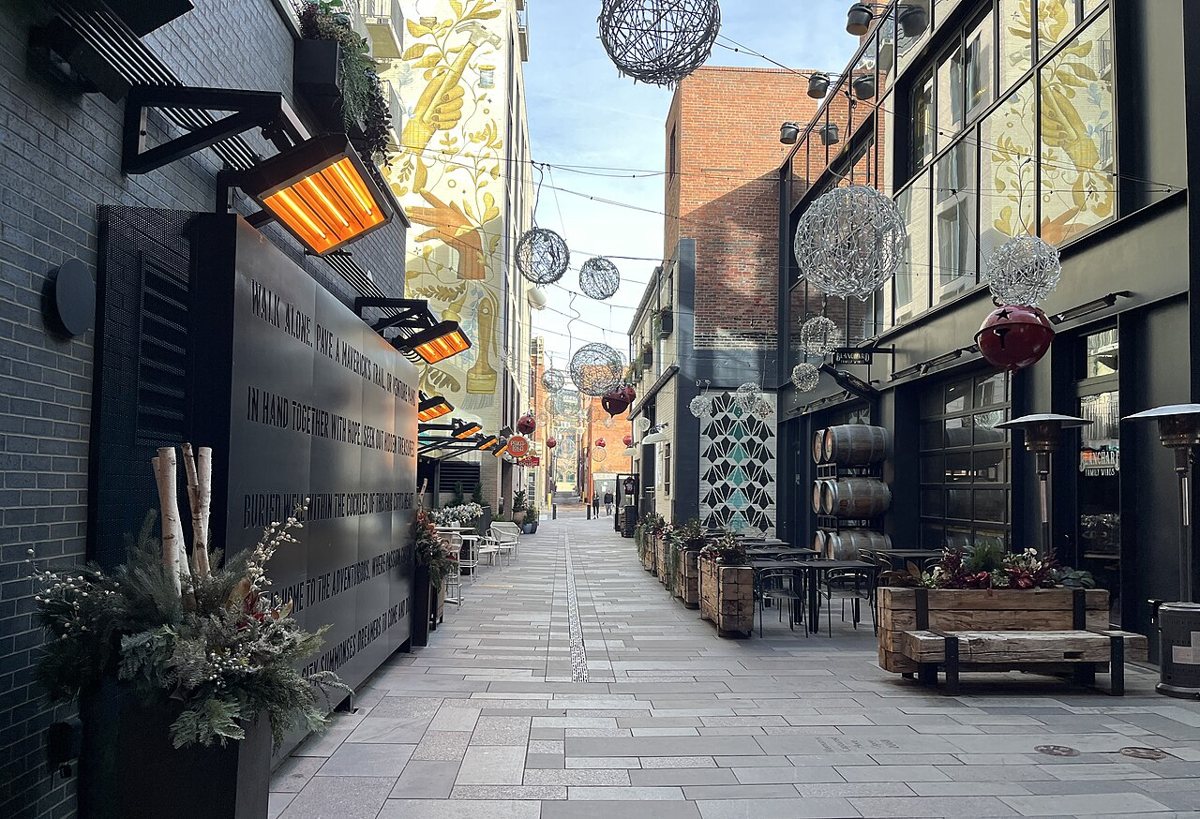
The Dairy Block took an old dairy processing building and the alley behind it and turned the whole footprint into a compact, walkable micro-district, with a boutique hotel, small shops, a coffee bar, and a rotating lineup of food and drink spots tucked into what used to be loading docks. The scale is the whole appeal, an actual alley you can wander through in ten minutes and still feel like you found something. String lights overhead, occasional live music or art installations depending on the season, and enough variety that it works for a quick coffee or a full night out. The alley connects two parallel streets, so it works as a handy shortcut as well as a destination, running between Wazee and Blake a block from Union Station.

Denver Milk Market occupies a restored dairy building on Wazee Street in the Dairy Block, and it does what the best food halls do, giving you a dozen-plus stalls and a bar program under one roof so a group with wildly different cravings can still sit together. Expect an oyster bar, a butcher counter, a coffee stall, plus a rotating mix of vendors around communal seating, all inside restored brick and heavy timber that makes it feel more like a converted warehouse than a food court, because it is one. It gets loud and full fast around dinner hours, so an early or late visit buys you actual elbow room. You will find it on Wazee Street in central LoDo, a few blocks south of Union Station.
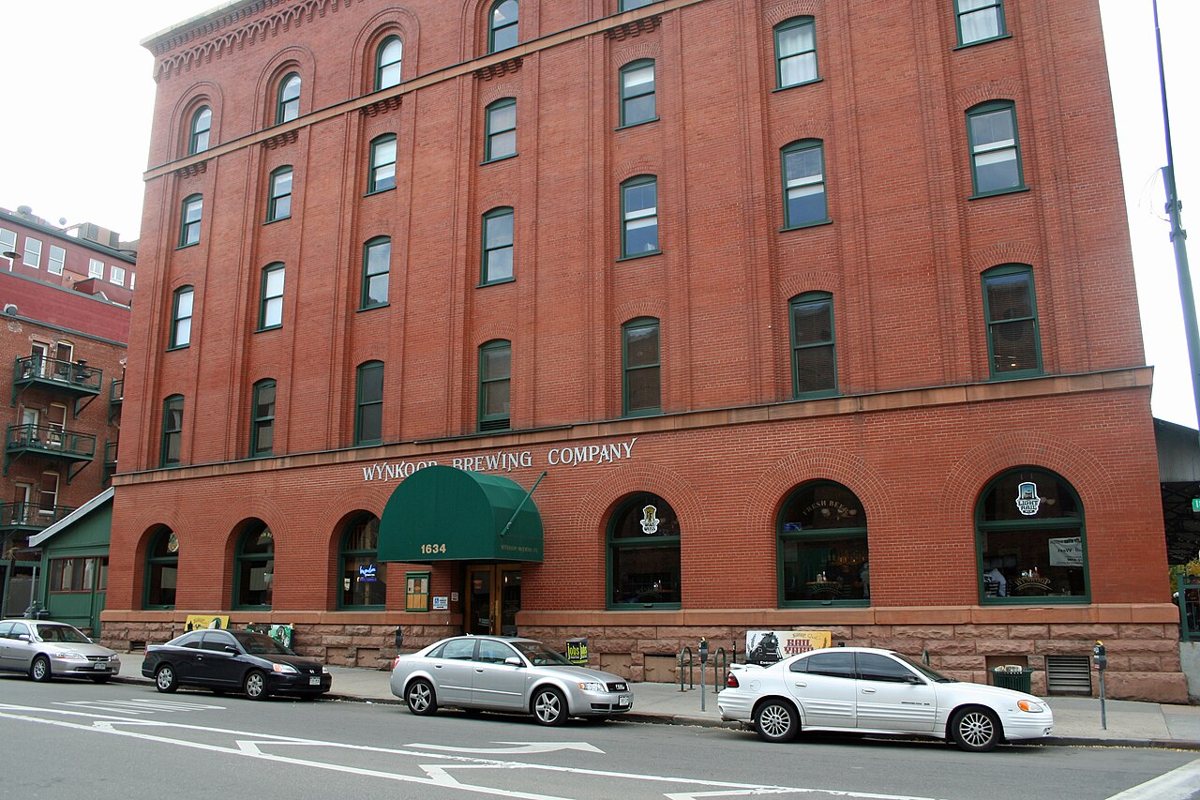
Wynkoop Brewing Company opened in 1988 in a converted warehouse across from Union Station, back when there were maybe a handful of brewpubs in the entire country, and it's one of the reasons Denver ended up taking craft beer as seriously as it does now. Founded by a group that included future mayor and governor John Hickenlooper, it's as much a piece of local political trivia as it is a beer destination. The building still has a pool hall upstairs, a nod to its original identity, and the beer list runs from house standards to rotating seasonal batches. The city's brewing scene has grown into one of the country's most serious since Wynkoop opened its doors, and LoDo and the neighborhoods around it are still full of taprooms carrying that same tradition, part of Denver's wider brewery scene that locals treat as a point of civic pride rather than a novelty. When the main bar is packed, head upstairs to the pool hall. It stands at 18th and Wynkoop, directly across from Union Station.

Tattered Cover has been Denver's defining independent bookstore for decades, and a LoDo location has anchored the neighborhood's literary side for years, a place where you can lose an afternoon in the stacks and end up at a reading or a signing without planning to. It's the kind of store locals bring out-of-town friends to on purpose, not as an afterthought, because it says something real about how the city reads. Store hours and exact footprint have shifted over the years as the business has changed hands, so it's worth checking current hours before you make a special trip. The store hosts author events regularly, and checking the schedule ahead can turn a browse into an actual evening out. It sits in LoDo, a short walk from Union Station.

The River and the Outdoor Edge
Confluence Park marks the spot where Cherry Creek runs into the South Platte River, right at LoDo's western edge, and it's the clearest reminder that this neighborhood sits on real moving water, not just decorative fountains. In summer the park fills with kayakers and tubers working the small man-made rapids, and the paved paths along both waterways connect LoDo to miles of riverside trail in either direction without ever touching a street. The flagship outdoor store built into the old Tramway power building sits right at the park's edge, itself a good example of the neighborhood's habit of putting new uses into old brick. Early morning is the best time to catch the park before it fills, with good light on the water and the skyline behind it. It sits where 15th Street meets the river, at LoDo's western boundary.
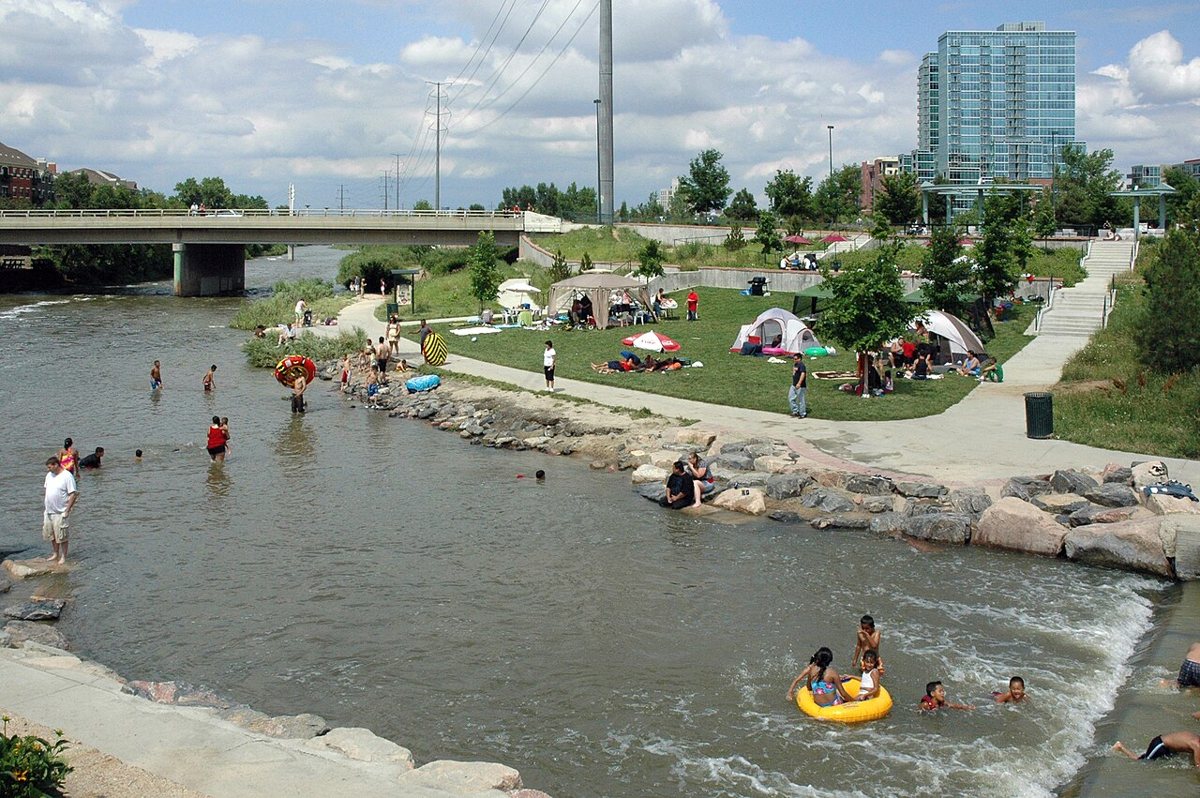

From Confluence Park, the Cherry Creek Trail runs southeast all the way to the Cherry Creek shopping district and beyond, while the South Platte River Trail heads north and south along the water, and both are paved and flat, used as hard by commuting cyclists as by tourists on rented bikes. This is where the neighborhood's outdoor character actually shows up, not in a mountain view but in a fast, practical trail network that locals ride to work every day of the year the weather allows. Runners hit it early, before the heat, and it stays busy with dog walkers and families on weekends. It's a good reminder that being outdoorsy in Denver means using what's here, not staring west and waiting for a weekend trip.
North of LoDo, across the tracks, the RiNo arts district has grown into among the most talked-about pockets of the city, wall-to-wall murals and converted warehouses full of galleries, breweries, studios. It's an easy walk or a short ride from Union Station and worth treating as an extension of a LoDo day rather than a separate trip, especially since the two districts share the same warehouse-conversion DNA. The outdoor character runs through here too, not because anyone's chasing mountain views from a rooftop bar, but because the river trail system ties LoDo to the RiNo arts district in one long, walkable corridor that locals use constantly and visitors tend to underrate.
Nightlife After Dark
LoDo turns over almost entirely after dark, and the shift is worth experiencing on purpose rather than by accident. The same brick storefronts that hold coffee shops and boutiques by day become rooftop bars and breweries by night, many of them with patios that catch the sunset over the foothills to the west, since the mountains sit on the horizon here rather than in the middle of the plan. Blake and Market Streets carry the heaviest bar traffic, especially on weekends and any night the Rockies, Nuggets, or Avalanche are playing nearby, when the sidewalks fill with jerseys and the patios stay loud past midnight. It's a serious beer town more than a club scene, and the difference shows in what's actually on tap rather than what's on the cover charge. Reservations matter more than people expect on weekend nights, especially anywhere with a rooftop, so booking ahead beats walking in and hoping. The craft beer culture runs deep here, not as a trend but as a genuine point of local pride, with brewers who compete on technique the same way anglers compete on a river. Expect a green chile burger or a bowl of Christmas-style chile on more than one late-night menu, the kind of Colorado comfort food that shows up as often at a bar counter as at a sit-down dinner. Cannabis is legal and has been for well over a decade, so nobody here treats it as scandalous or novel, just another normal part of a night out for the people who partake, and a non-issue for the people who don't.
LoDo by Time of Day
Morning
Mornings in LoDo belong to Union Station and the river trails. Coffee in the Great Hall, then a walk down to Confluence Park before the heat or the crowds arrive, is the closest thing the neighborhood has to a local ritual. Blake and Wazee Streets are quiet enough before nine that you can actually appreciate the architecture without dodging foot traffic.
Afternoon
Afternoons are for the food hall crawl and the shops, Larimer Square and the Dairy Block both hit their stride once the lunch rush clears out, and it's the easiest window for browsing without fighting a dinner-hour crowd.
Evening
Evening is game time if there's a Rockies, Nuggets, or Avalanche game on the schedule, and LoDo reorganizes itself around whichever stadium or arena is lit up that night. On non-game nights, this is prime time for Larimer Square's dinner scene and the brewpub crowd settling in.
Late Night
Late night concentrates around Blake and Market, rooftop bars and taprooms staying loud well past most other Denver neighborhoods wind down, especially on weekends.
Getting There and Getting Around
- From the airport, the A Line train runs directly into Union Station, which makes LoDo one of the easiest Denver neighborhoods to reach without a car from the moment you land.
- Street parking in LoDo is metered and competitive, especially on game days, and several parking garages cluster around Union Station and the ballpark for a flat rate that's usually easier than hunting for a spot.
- Game days change everything. Check the Rockies, Nuggets or Avalanche schedules before you plan a visit, since a night with a home game means heavier crowds, pricier parking, and a very different energy than a quiet weeknight.
- Free and low-cost options include walking the historic blocks of Larimer Square, browsing the Dairy Block alley, wandering Union Station's Great Hall, and walking the river trails at Confluence Park, none of which require a ticket or a reservation.
- LoDo is compact enough to cover entirely on foot once you've arrived, roughly a twenty-minute walk end to end, so a car is genuinely optional for a full day in the neighborhood.
- Elevation catches visitors off guard more than the mountains do. The city sits a mile above sea level, and a day of walking, a couple of drinks, and full sun can wear people out faster than they expect, so pace accordingly and drink water alongside the beer.
- Weekday mornings and early afternoons are the calmest window for photographing the architecture along Wazee and Blake Streets without foot traffic in every frame.
The Bottom Line on LoDo
LoDo works because it never had to choose between being historic and being useful. The warehouses that almost got bulldozed in the 1960s now hold a train station, a ballpark's worth of bars, a food hall, and a bookstore, and none of it feels staged for visitors, because locals use every part of it constantly. This isn't a neighborhood defined by proximity to the mountains, whatever the postcards imply about Denver in general. It's defined by brick, a working river, two professional sports venues, and a brewing tradition that predates most of what people now call the craft beer boom. Spend a full day here on foot, catch a game if the schedule lines up, and you'll understand why locals treat LoDo less like a tourist stop and more like the front room of the whole city. Skip the urge to treat it as a launch pad for the peaks and it rewards you on its own terms, one warehouse block at a time.